
MCA Flame Retardant|CAS 37640-57-6
MCA flame retardant stands for melamine cyanurate, CAS No.: 37640-57-6, features a high decomposition temperature, is halogen-free, has a small particle size, and can be compounded with other flame retardants. MCA exhibits excellent flame retardant effects on materials such as PBT, PP, TPE, TPU, EVA, PU, PA6, unsaturated resins, acrylic emulsions, and wires and cables. Its water solubility is only 0.01 g/L, and its decomposition temperature is greater than 360℃. It can be compounded with phosphorus-containing flame retardants such as aluminum hypophosphite, aluminum diethylphosphinate, and red phosphorus to achieve a synergistic P-N flame retardant effect.
I. Basic Data
English Name: Melamine Cyanurate
Molecular Formula: C6H9N9O3
Molecular Weight: 255.2
CAS Number: 37640-57-6
EINECS: 253-575-7
Chemical Formula: C6H9N9O3
Molecular Weight: 255.2
Flash Point: 325.3℃
Melting Point: 350℃
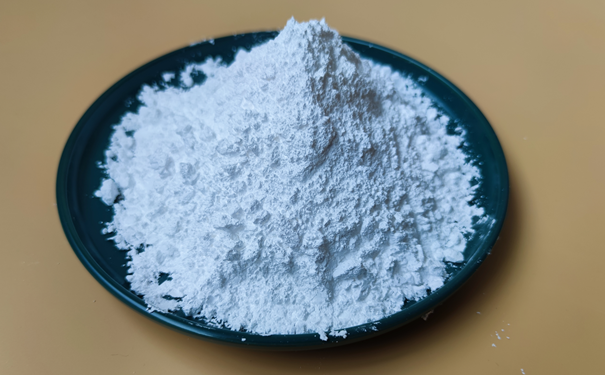
Properties: White powder, non-toxic, odorless, with a slippery feel; insoluble in water and most organic solvents.
II. MCA Flame Retardant Mechanism
1. Endothermic Flame Retardancy
When heated, MCA undergoes an endothermic decomposition reaction. This endothermic process effectively reduces the temperature of the material surface and combustion zone, delaying or even interrupting the thermal decomposition of the polymer, thereby reducing the generation of flammable gases.
2. Gas-phase flame retardancy: MCA decomposes at high temperatures, producing a large amount of non-flammable gases such as N2, NH3, CO2, and H2O. These gases dilute oxygen and combustible gases, reducing the oxygen concentration and partial pressure of combustible gases in the combustion zone. A barrier is formed between the condensed phase and the gas phase, hindering heat and mass exchange.
3. Charring flame retardancy: The main decomposition products of MCA are melamine and cyanuric acid, which interact with PA to promote the formation of a dense, expanded char layer. This char layer effectively blocks external heat transfer to the interior, prevents the volatilization and escape of internal combustibles, and also blocks oxygen entry, reducing the release of smoke particles.
III. Product Features:
1. Reasonable particle size distribution, small specific surface area, non-agglomeration, and no white spots or white patches on the surface.
2. In polyacetal resin, melamine cyanurate (MCA flame retardant) does not drip when exposed to fire, and does not precipitate or adhere to the mixing rollers during processing. 3. Excellent arc retardancy, with an arc index reaching 430V.
4. Wide range of applications; can be used alone or in combination with most general-purpose and engineering plastics.
5. When used for PA6 flame retardancy, it does not form a film, does not exudate, and has good processability.
IV. Applications and Formulation Examples
Material | formula | performance | Application scenarios |
PA6/PA66 (unreinforced) | 8–15% | UL94 V-0 (1.6mm) | Connectors, terminal blocks, cable ties |
PA6/PA66 (Reinforced) | 18–25% or MCA + phosphorus-based | UL94 V-0 | Automotive parts, 5G casing |
PP/PE | MCA:MPP ≈ 1:1, total 20–25% | LOI≥28, V-0 | Appliance casings and tubing |
PVC | MCA 8–15% + Aluminum hypophosphite 2–5% | V-0, reduced smoke density | Wires and cables, profiles |
EVA/TPV/Silicone Rubber | 10–15% or compound | V-0, migration resistant | Cable sheath, heat shrink tubing |
Epoxy/Phenolic | 10–15% | V-0, High CTI | Packaging, copper-clad laminate |
Paints/Fabrics | 10–15% | Expands into charcoal, low smoke | Fire retardant coatings |
V. Technical Specifications
Content % ≥99.5%
Whiteness ≥96%
Volatile Content % ≤0.2%
pH Value: 6-8
Medium Particle Size of Melamine Cyanurate (D50): 3-25 μm
Residual Cyanuric Acid % ≤0.2%
Density (g/cm³): ~1.7
Bulk Density (g/L): ~330
Moisture Content % ≤0.4%
Water Solubility % ≤0.1%
VI. Packaging
25KG/bag, store in a cool, dry warehouse.
MCA flame retardants can be surface modified, and resin coating can significantly improve compatibility with polymers. The products are non-toxic, produce low smoke, and release flame-retardant gases with minimal negative environmental impact. For unreinforced PA, MCA is preferred alone; for reinforced PA or PP/PE, it is advisable to blend with phosphorus-based compounds. Particle size and dispersion directly affect mechanical properties and flame retardancy; D50 ≤ 4μm and D98 ≤ 25μm are preferred. A balance must be struck between the addition amount and mechanical properties, flowability, and, if necessary, toughening agents and lubricants.
 High efficiency partial antimo
Characteristics and Processing
Structure and Properties of MC
PP Halogen-Free Flame Retardan
High efficiency partial antimo
Characteristics and Processing
Structure and Properties of MC
PP Halogen-Free Flame Retardan